Used Car Market: Size, Share, and Growth Predictions for 2032
USED CARS MARKET: A GROWING TREND
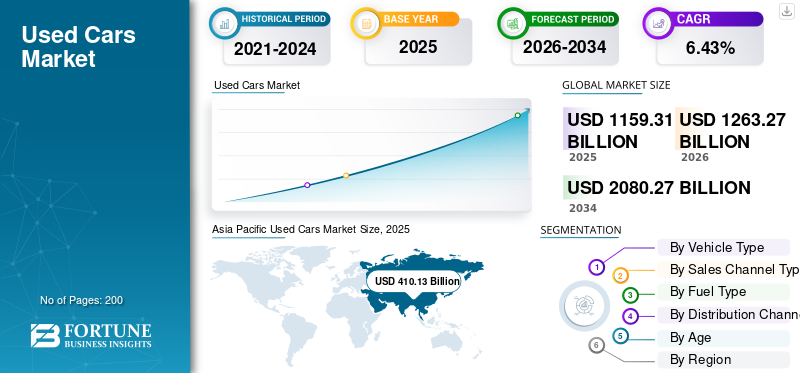
The used car market is booming, with its size being valued at a staggering USD 1,159.31 billion in 2025. Projections indicate that this market will experience remarkable growth, expected to reach USD 2,080.27 billion by 2034. This growth translates to a compound annual growth rate (CAGR) of 6.43%, showcasing a strong interest in pre-owned vehicles. The Asia-Pacific region leads the way, possessing a notable 35.38% market share in 2025.
WHAT’S FUELING THIS GROWTH?
The rise in demand for used cars can be traced to several key factors:
Economic Pressures: With new vehicles becoming increasingly expensive due to rising manufacturing costs, buyers are looking for more affordable options. New car prices are driven up by factors like electrification investments and strict regulations. As a result, used cars are emerging as rational alternatives, offering comparable performance and safety features without the hefty price tag.
Longer Vehicle Lifespan: Modern cars are built to last longer, extending their usability and making them viable in the used car market. This also means that more used vehicles are entering the marketplace, making them more available to consumers.
Financing Options: Financial institutions are responding to the rising demand for used cars by offering tailored financing products. This has improved access for various consumer segments who may have previously found it difficult to purchase a vehicle.
Digital Transformation: The rise of digital platforms is reshaping the car-buying experience. Companies like Carvana and AutoTrader allow users to browse, inspect, and purchase vehicles entirely online, making the buying process much easier and more transparent.
CONSUMER BEHAVIOR
Consumer behavior has shifted significantly over recent years. Many buyers prefer the affordability of used vehicles over brand-new cars, especially as urbanization increases and public transportation options remain limited. The COVID-19 pandemic also shifted priorities towards personal mobility, as public transport became less appealing. As new car inventories dwindled due to production delays, more shoppers turned to used options.
MARKET TRENDS
Key trends in the used car market include:
Hybrid Retail Models: These models combine online discovery with physical inspections. This approach lets buyers start their journey online but complete the purchase at a dealership, blending convenience and tactile inspection.
Increasing Interest in Electric Vehicles (EVs): The used electric vehicle market is gaining traction as awareness of sustainability grows. Many consumers are increasingly opting for used EVs as a cost-effective alternative to new models.
Institutional Participation: Established manufacturers are diving into the used car market to capture additional revenue from certified pre-owned programs. This trend helps retain customers beyond their first vehicle purchase.
MARKET DRIVERS AND CHALLENGES
While the market is experiencing significant growth, there are also challenges to consider:
Interest Rates: Rising interest rates can deter buyers, particularly for financing used cars, which typically have higher average rates than new car loans. Some buyers may feel inclined to purchase new models, despite higher costs, because of better financing options.
Maintenance Costs: Older vehicles may require more maintenance, which can discourage potential buyers due to the financial burden. Luxury brands often have high maintenance costs that can exceed those of standard vehicles.
Quality Concerns: Some buyers may hesitate due to inconsistent quality in used vehicles. The fragmented resale ecosystem can complicate vehicle history and pricing clarity, which develops a lack of trust with consumers.
SEGMENTATION ANALYSIS
The used car market is segmented based on various criteria such as vehicle type, sales channels, fuel types, and age.
By Vehicle Type: SUVs are rapidly becoming the preferred choice among consumers, particularly due to their safety and versatility. Sedans also remain popular due to their comfort and utility, while hatchbacks are favored by younger buyers for their affordability.
By Sales Channel: The offline method of purchasing used cars still dominates the market, accounting for over 70% of transactions. However, online channels are the fastest-growing, spurred by the pandemic. Many consumers appreciate the convenience and efficiency of browsing for cars online.
By Fuel Type: Petrol vehicles currently lead the market due to their availability and performance. However, electric vehicles are poised to grow swiftly amid rising environmental awareness.
By Age: Vehicles aged 4 to 7 years dominate the landscape. This age group largely consists of certified pre-owned cars that have undergone inspections, making them attractive options for buyers seeking quality without paying full price.
REGIONAL INSIGHTS
The global landscape of the used car market varies by region:
Asia-Pacific: This region is the largest market, and it is driven by rapid urbanization and rising incomes in countries like China and India. The availability of digital platforms is also shaping buying patterns.
North America: Characterized by a well-established resale ecosystem, North America’s market benefits from structured financing options and the rising popularity of certified pre-owned vehicles.
Europe: Diverse consumer preferences across the continent shape this market, but it faces challenges such as strict emissions regulations that affect buying trends.
COMPETITIVE LANDSCAPE
Key players like CarMax have emerged as influential forces in the used car marketplace. CarMax’s unique no-haggle pricing model appeals to consumers looking for transparency in their transactions. Their investment in online and physical platforms makes the purchasing process seamless.
The market is increasingly dominated by digital platforms, which are transforming how used cars are sourced, inspected, and sold. This transition is supportive of a more consolidated environment, where consumer trust, data analytics, and inventory access define competitive differentiation.
Understanding the dynamics of the used car market emphasizes how closely tied these trends are to overall consumer behavior, economic pressures, and advancements in technology. The transformation taking place in the automotive industry highlights a promising trajectory for used vehicles, reaffirming their importance in the global automotive landscape.
Keeping an eye on these trends could provide valuable insights for potential buyers and industry followers alike, showcasing the evolving landscape that continues to define the used car market.
To stay updated on the latest developments in the used car industry, consider following our Facebook page and visiting losangeles cashforcarsquick for quick and efficient services.
#Cars #Market #Size #Share #Growth #Forecast #Report #losangelescashforcarsquick


