BYD’s Electric Supercar Reaches 312 MPH, the Fastest Speed Ever for a Production Car
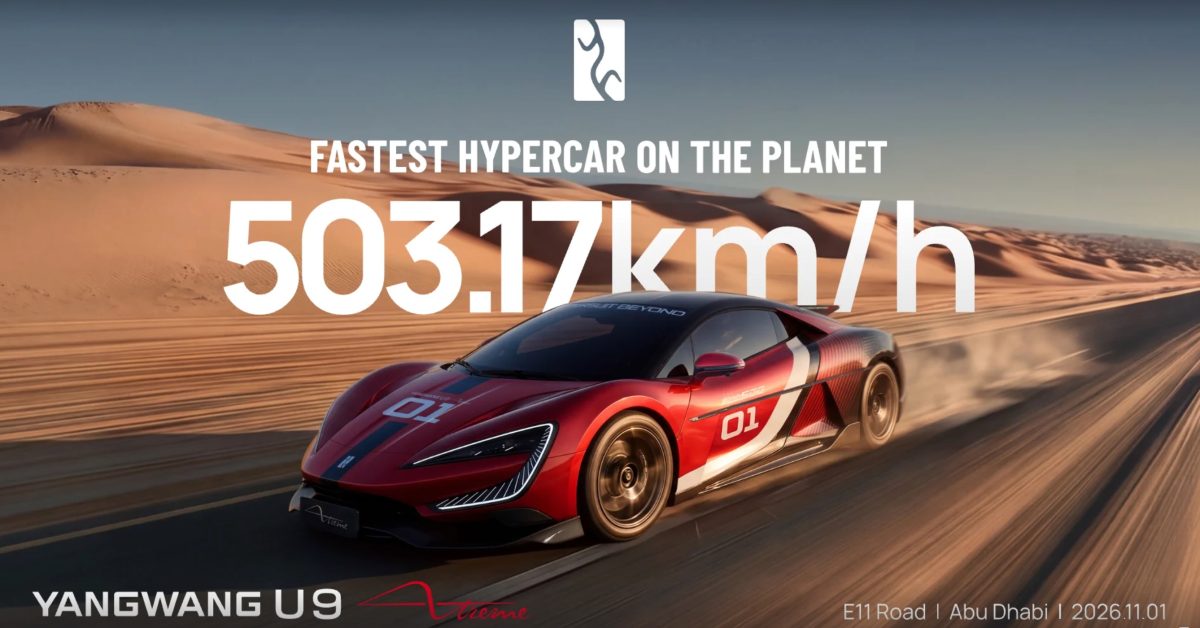
BYD ELECTRIC HYPERCAR BREAKS 500 KM/H BARRIER
BYD’s Yangwang U9 Xtreme has reached 503.17 km/h (312.66 mph) on a closed road in Abu Dhabi. That makes it the first production car officially recognized for exceeding 500 km/h. The record-breaking machine is fully electric, showing just how far high-performance electric cars have advanced.
The run was recognized by the FIA, motorsport’s international governing body, and Guinness World Records. It is the U9 Xtreme’s second top-speed record in just over a year. Its previous mark was 496.22 km/h, set in Germany in September 2025.
A FAST ROAD AND A CAREFULLY PREPARED CAR
The attempt took place on a closed 10-kilometer section of the Sheikh Khalifa Bin Zayed International Road in Abu Dhabi’s Al Dhafra Region. The team had a straight stretch of about seven kilometers for the high-speed run. German racing driver Marc Basseng, who also set the car’s earlier record, was at the wheel.
The first day of testing did not produce a new record. Basseng reached 490 km/h, according to the FIA. The team then made changes to the rear wing, suspension damping and tire pressures. On his second attempt the following day, November 1, Basseng reached 503.17 km/h.
The previous U9 Xtreme record had already surpassed the 490.48 km/h achieved by a Bugatti Chiron Super Sport 300+ in 2019. The new result puts BYD’s limited-run electric car at the center of a long-running competition among the world’s fastest road cars.
FOUR ELECTRIC MOTORS AND MORE THAN 3,000 PS
The U9 Xtreme is a track-focused version of the Yangwang U9, a flagship supercar from BYD’s luxury brand. It uses four electric motors, each rated at 555 kilowatts. Together, they produce a claimed 2,220 kilowatts—more than 3,000 metric horsepower, or nearly 3,000 horsepower.
The car also uses a 1,200-volt electrical system and a high-performance version of BYD’s Blade Battery. Its battery cells use lithium iron phosphate, or LFP, chemistry, which BYD also uses in some more affordable vehicles.
The U9 Xtreme is not just built for a straight-line speed run. It has also set a production electric-car lap record at Germany’s Nürburgring Nordschleife, completing the circuit in 6 minutes and 59.157 seconds. For comparison, the Rimac Nevera R has reached a top speed of 431.45 km/h.
BYD plans to build only 30 U9 Xtreme cars, with a reported price of about $3 million each. Buyers in the United States should not expect to see it at local dealerships: BYD does not sell passenger cars in the U.S.
IMPORTANT DETAILS BEHIND THE RECORD
There is an important qualification to the 503.17 km/h achievement: it was a one-direction run. Guinness lists the relevant titles for this attempt as single-direction records. BYD’s announcement referred to four Guinness records, while the FIA’s announcement listed two for this run.
That distinction matters because top-speed records have often been based on the average of two runs in opposite directions. Running both ways helps reduce the effect of wind and road slope. For example, Koenigsegg’s 2017 Agera RS record of 447.19 km/h used an average of runs in opposite directions.
The U9 Xtreme also used special semi-slick tires developed with Giti Tire. It has not been confirmed whether the customer cars will use the same tires. These details do not erase the car’s remarkable speed, but they help explain why some people may want a two-way run before treating the result as directly comparable with records measured under different rules.
The record follows a dangerous moment during an earlier test, when a U9 Xtreme reportedly struck a guardrail at about 280 mph. The driver was not hurt. BYD returned to testing afterward, and the car later reached 457.89 km/h on another run.
WHAT THE RUN MEANS FOR ELECTRIC CARS
The achievement challenges the old idea that electric cars cannot maintain extreme speeds because their motors or batteries will overheat. The U9 Xtreme’s performance shows that an electric powertrain can deliver extraordinary speed in a specially engineered car. Still, a record-setting hypercar is very different from an everyday EV: it is expensive, rare and designed for a narrow purpose.
This car is also a powerful advertisement for BYD and its Yangwang luxury brand. Even if most owners never drive near its top speed, the record can draw attention to the company’s engineering and help build its reputation in markets such as Europe. Other supercar makers may now face pressure to respond. Koenigsegg has said its Jesko Absolut could theoretically reach 500 km/h, but it has not attempted a record run.
The 503.17 km/h result is an impressive milestone, especially for an electric production car. The single-direction format and special tires are worth keeping in mind when comparing it with older records. A properly measured two-way run would provide another test of the U9 Xtreme’s place in the speed-record race.
Sources: FIA announcement on the Yangwang U9 Xtreme speed attempt; Guinness World Records listings; BYD’s announcement of the record; Electrek’s reporting.
Follow our page on Facebook for more car news, and visit the losangelescashforcarsquick website to learn more about selling a vehicle.
#BYDs #electric #hypercar #hits #mph #production #car #kmh #losangelescashforcarsquick


